Bringing Poultry and Hatching Eggs to Alaska
Notice:
Due to the ongoing highly pathogenic avian influenza (HPAI) disease outbreak in both wild and domestic birds, import requirements may change frequently and with little notice. Be sure to check with the appropriate authorities frequently when planning the transportation of poultry and birds.
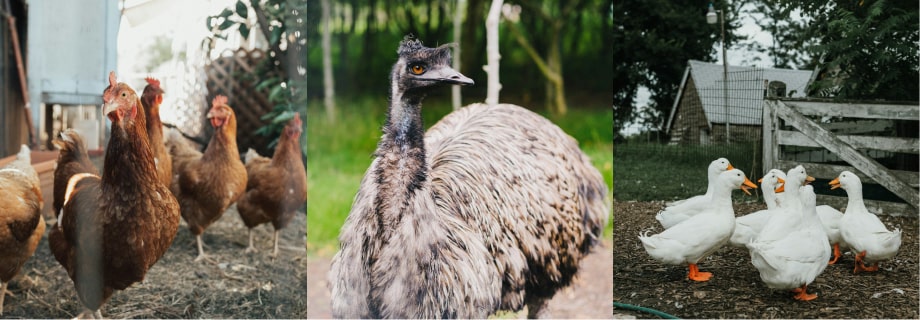
Poultry includes chickens, turkeys, waterfowl, game birds, pigeons, doves, emus, and other domestic fowl that are kept for the production of food or feather, for sport, for exhibition. This DOES include pet chickens.
If you are importing an exotic, wild, or pet bird, please see Bringing Exotic Animals to Alaska webpage for import requirements of other avian species.
Certain poultry may be subject to U.S. Fish and Wildlife Service and/or Alaska Department of Fish and Game regulations.
On this page
Health, Testing, and Transport Requirements
- The animal must:
- Originate from a flock that has tested negative for pullorum and typhoid disease within 30 days of import, OR were produced in compliance with 9 C.F.R 145.1-145.54 (National Poultry Improvement Plan for Breeding Poultry), 9 C.F.R. 147.1-147.48 (Auxiliary Provisions of National Poultry Improvement Plan), and The National Poultry Improvement Plan Standards.
- Animals must be transported in a vehicle appropriate for the size and number of animals being transported, free of hazards that could injure the animals, and maintained in a sanitary condition.
Required Documentation
- A Certificate of Veterinary Inspection (CVI), or animal health certificate, issued by a licensed and accredited veterinarian within 30 days of import.
- A complete APHIS VS Form 9-3 (Report of Sales of Hatching Eggs, Chicks, and Poults) may be substituted for a CVI for those animals that participate in the National Poultry Improvement Plan (NPIP).
- An Alaskan import permit issued by the Alaska Office of the State Veterinarian (OSV). Accredited veterinarians may apply for an import permit online. Import permits are valid for 30 days after issuance and are non-transferable. One import permit may be issued for multiple animals of the same class. Import permit numbers must be written on the CVI.
Import documents must accompany the animal at all times during travel and must be attached to the waybill if shipped.
International Travel, Including Through Canada
Note: For animals transiting from the contiguous 48 United States to Alaska, the international CVI, endorsed by the United States Department of Agriculture (USDA) Animal and Plant Health Inspection Service (APHIS) should be submitted to the Alaska OSV. A separate interstate CVI is not required.
In addition to the above State of Alaska requirements, other agencies have their own requirements for poultry traveling through Canada or originating in another country. Please contact the following agencies for current requirements:
- USDA APHIS Veterinary Services (VS): Email vs.sumas.poe@usda.gov or call 360-988-5715.
- Canadian Food Inspection Agency (CFIA): Call 1-800-442-2342.
- U.S. Customs and Border Protection (USCBP): Call 907-744-2252.
For additional support, please email akcvi@alaska.gov. Note that the akcvi email is not monitored for urgent correspondence. If you have an urgent matter related to animal imports, please contact the Alaska Office of the State Veterinarian at 907-375-8215.
If the above conditions are not met, or it is determined to serve the interests of animal or public health, the Alaska State Veterinarian may order an animal quarantined at the owner’s expense until such time as it is released from quarantine, euthanized, slaughtered, or destroyed.
Resources
Page last published: 04/23/2026
 Indicates an external site.