Wrangell Junkyard
- View detailed information from the database on this site.
- Database Name: Wrangell Junkyard
- Status: Cleanup Complete
- Location: Wrangell
- Latitude: 56.422290
- Longitude: -132.357175
4-Mile Zimovia Highway
DEC Contaminated Sites contact: No Longer Assigned dec.icunit@alaska.gov, 907-465-5229
- Click on photos or maps for larger versions.
- Contacts updated: 12/19/2022
- Summary updated: 12/12/2025
Site Narrative
-
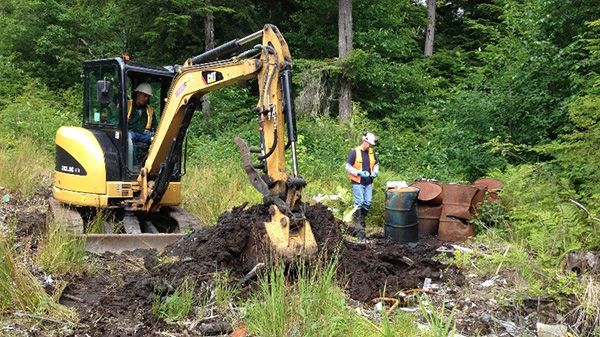
Test pit excavation work by EPA in 2014
ADEC -
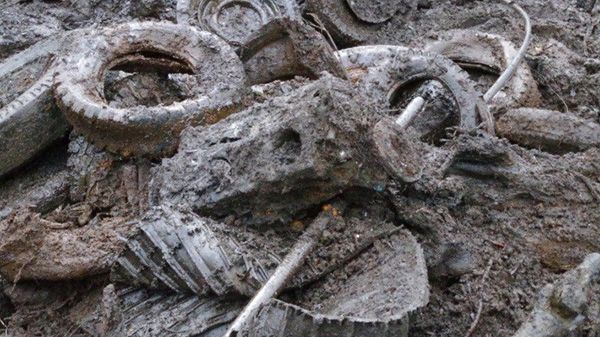
Contaminated soil, tires and other buried debris encountered during the 2016 cleanup
Nortech/NRC Alaska -
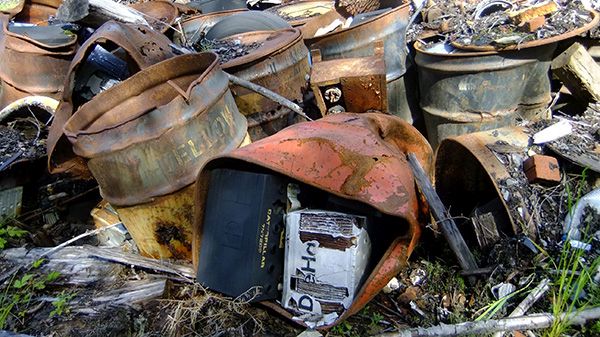
Drums and Crushed Batteries 2012
ADEC -
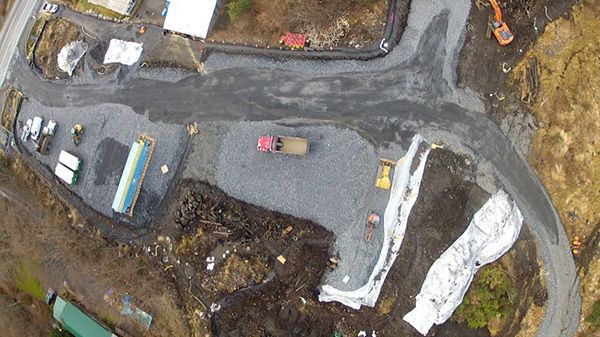
Aerial of the site showing equipment staging and cleanup status in 2016
NRC Alaska -
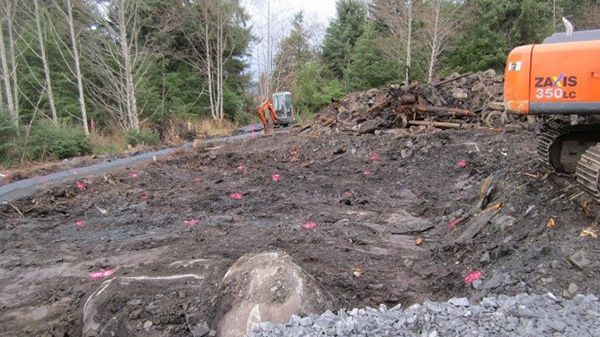
View of excavated lead contaminated soil showing sampling locations
Nortech -
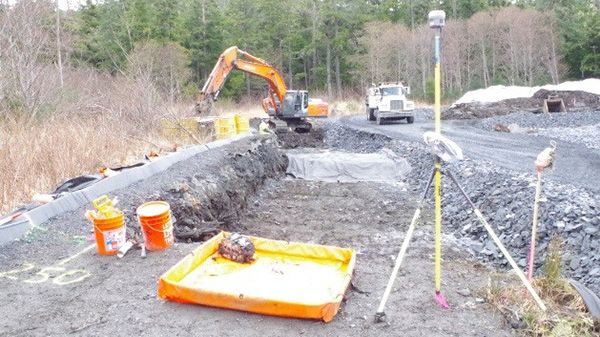
View of cleanup effort in 2016 showing contamination along property boundary
Nortech -
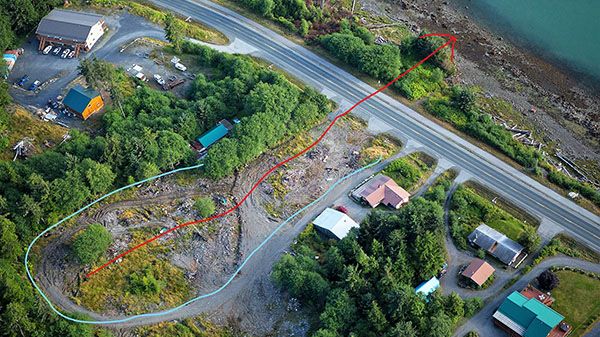
Aerial image showing the junkyard property and direction of lead migration to intertidal area
City of Wrangell -
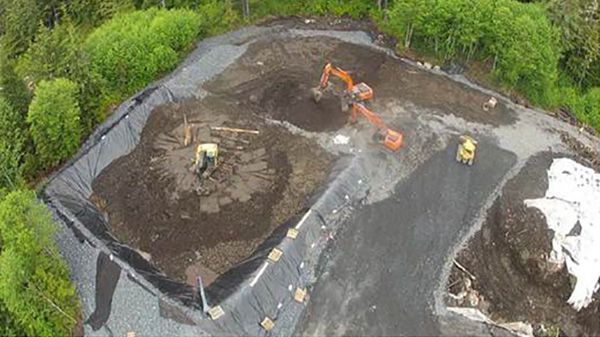
Aerial of the containment area for the treated lead contaminated soil at the junkyard property in 2016
NRC Alaska -
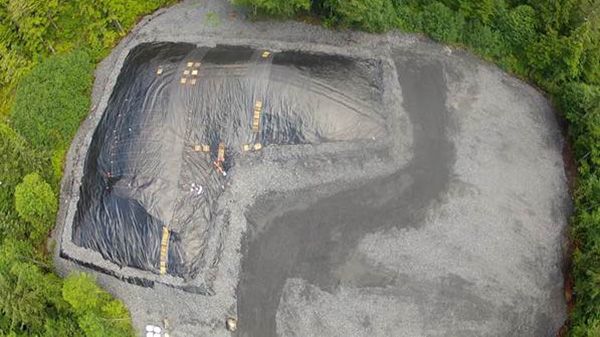
Completed stockpile in 2016
NRC Alaska -
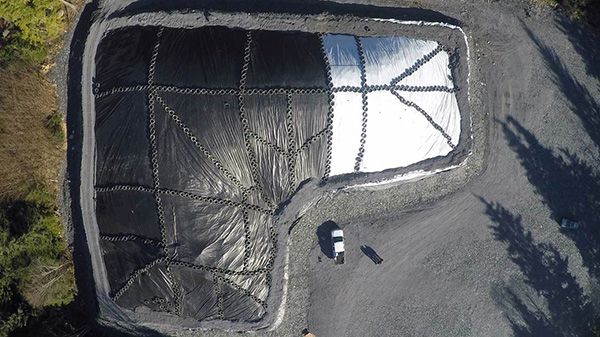
Repaired and reinforced cover for stockpile after it was damaged by wind in late 2016
NRC Alaska -
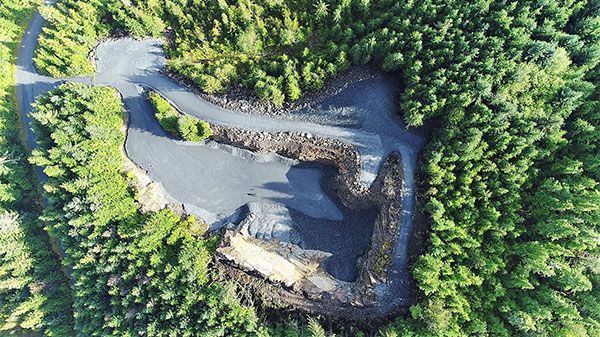
Aerial of Department of Natural Resources Rockpit showing prepared site for monofill
NRC Alaska -
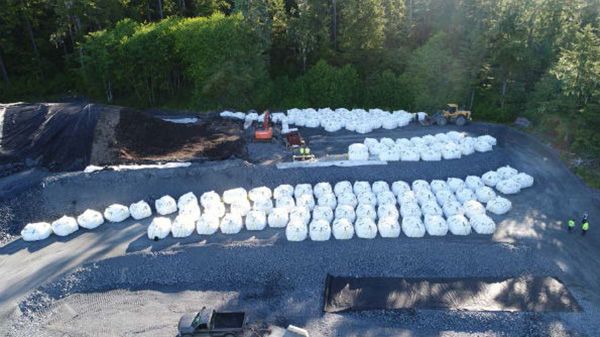
Image showing loaded FIBCs at the junkyard property
NRC Alaska -
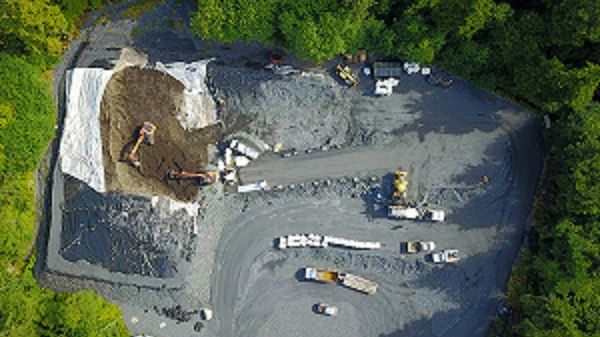
Remaining area of the stockpile being exposed and loaded into FIBCs August 19
NRC Alaska -
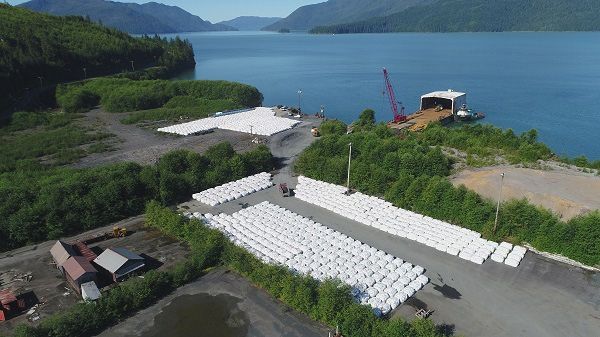
Drone aerial of bags staged at former Silver Bay Sawmill facility July 23
NRC Alaska -
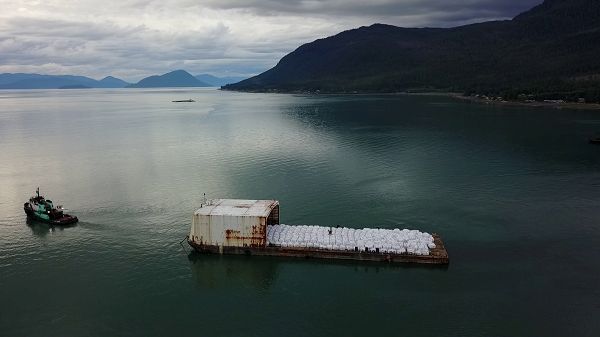
First barge mobilization (with two barges) of 780 FIBCs completed August 7
NRC Alaska -
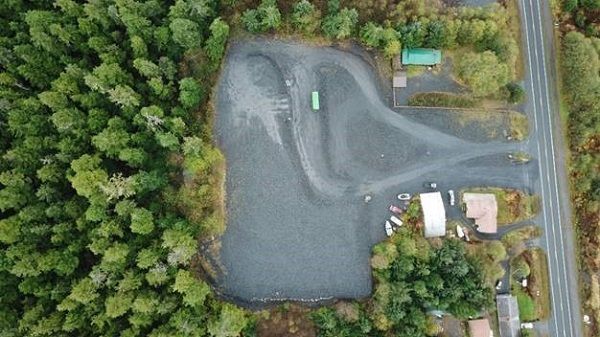
Final Site Conditions, October 2019.
NRC Alaska
Cleanup Complete
On April 19, 2019, the DEC issued a Cleanup Complete determination for the Wrangell Junkyard lead contaminated site cleanup project. This marks the conclusion of its efforts to address the risks at this site dating back to 2000, when staff first conducted a site inspection. In the intervening years, DEC partnered with the U.S. Environmental Protection Agency (EPA) and the City and Borough of Wrangell (CBW) to establish the degree and extent of contamination from lead, other heavy metals, polychlorinated biphenyls (PCBs) and petroleum from this former unpermitted salvage site that had operated since the 1960s. Concentrations of lead saturated the 2.51-acre site to levels as high as 155,000 milligrams per kilogram (mg/kg). Lead and other contaminants were found on three adjacent properties and leaching into the nearby intertidal area where recreational shellfish gathering occurs. The volume of lead contaminated soil found was ultimately more than four and a half times the initial estimate and eventually totaled 18,350 cubic yards. The 2016 DEC-led cleanup excavated all contaminated soil at the site and adjacent properties to residential cleanup levels and stabilized it with a product called EcoBond, which rendered the material non-hazardous. By the fall of 2018, DEC’s contractors had shipped the contaminated soil, waste, and debris from the site to a disposal facility in Oregon. The total cost to clean up and restore the site was approximately $17.5 million. The property can be beneficially reused and redeveloped by the CBW without restriction.
Site Background and Description
The Wrangell Junkyard property is located at Mile 4 of the Zimovia Highway, Wrangell, Alaska (located approximately 150 feet from Zimovia Strait) in southeast Alaska.
The Wrangell Junkyard operated on the property as Byford Salvage from the 1960s until the late 1990s when the property was sold. The new owner barged out the marketable metal for salvage over a short period of time before abandoning the property, leaving large piles of metal and other debris and improperly stored hazardous materials including hundreds of batteries, transformers, tanks, drums and tires.
Between 2000 and 2004, the EPA and DEC conducted limited site assessment work on the property because the responsible parties were unable to do so. However, much of the site was not accessible due to the large volume of debris/waste on the surface. In 2006, the CBW foreclosed on the property due to unpaid property taxes. Beginning in 2010, the CBW began clearing the metal debris from the site but lacked the financial and technical resources to conduct the necessary cleanup.
In 2014, the EPA conducted a Targeted Brownfield Assessment at the site on behalf of the CBW. The results, published in 2015, documented extremely high levels of contamination. Surface soil samples collected over a large area of the property contained lead concentrations over 10,000 mg/kg and as high as 50,000 mg/kg, or 125 times the DEC cleanup level of 400 mg/kg. Additionally, sample results from subsurface soil, surface water, groundwater, marine sediments, and shellfish tissue contained elevated concentrations of lead and other contaminants. In spring 2015, EPA determined the site posed an imminent risk to human health and the environment and initiated plans to conduct a Time Critical Removal Action under Superfund, but the Gold King Mine release in Colorado subsequently became a higher EPA response priority. DEC concurred with the EPA determination that an imminent and substantial risk to human health and the environment was present at the site and in late 2015 initiated a state-led emergency cleanup of the site to address the risks.
Public Health and Environmental Concerns
Environmental sampling conducted prior to the cleanup identified extremely high levels of lead in surface soils, elevated concentrations of lead in surface water and groundwater, and trace concentrations of lead and other metals in sediments and fish tissue in the intertidal area downgradient of the site. The CBW advised residents who might clam on the beach in front of the Byford property that shellfish harvested in this area could be contaminated with lead and other metals transported by water runoff from the Byford property. An evaluation by the Alaska Department of Health and Social Services Epidemiology Division determined the levels of metals in the shellfish tested did not pose a risk to human health at normal rates of consumption. Additional risks were potentially posed to adjacent property owners due to contamination that may extend onto their properties. Left unaddressed, the site itself posed an unacceptable risk to humans and ecological receptors from uncontrolled lead exposure.
The cleanup that was conducted in 2016-2018 removed all metals-contaminated soil from the site; thus, no risk to human health or the environment is present.
State-Led Cleanup Activities
In fall 2015, DEC approved spending up to $3.9 million from the Response Account of the Oil and Hazardous Substance Release Prevention and Response Fund to perform an emergency cleanup at the site. During the initial stages of the removal action, the DEC contractor installed silt fences and impermeable berms along the edges of the property, redirected inflowing drainages, and established collection points for the on-site drainages. During construction of an access road in 2016, large quantities of buried metal, rubber and wood debris were found. Although no new contaminants were found the volume of contaminated material requiring treatment was much greater than originally estimated.
DEC expected to have the contractor complete most of the work by late May of 2016 and to have the treated material removed and transported to a hazardous waste facility in Oregon. However, when the estimated total volume expanded to approximately 18,350 cubic yards, DEC had to reassess the treatment and disposal plan for the contaminated stockpile.
Based on the elevated concentrations of lead and other petroleum contamination found in the soil DEC made source area removal a priority to prevent acute exposure risks onsite and continued offsite migration of contaminants. The lead and other contaminants posed an imminent and substantial risk to downgradient surface water, sediment and shellfish in a popular harvest area on Zimovia Straits.
The contractors began treating the soil with Ecobond, a proprietary compound that reduces the solubility of lead in the soil. Confirmation samples for total lead were collected throughout the excavation base and all results for the samples met the DEC cleanup level for lead. Following the confirmation sampling, the excavation was backfilled with clean material from an offsite quarry.
The 18,350 cubic yards of stockpiled soil were onsite from 2016 to 2018, during which time DEC worked with the EPA, contractors, the CBW, the Wrangell Cooperative Association, community members, the Alaska Department of Natural Resources (DNR), and the U.S. Forest Service on disposal options. In 2018, the Governor requested funding to dispose of the soil out of state. The Alaska Legislature approved the $5 million request and mandated that it be funded out of the State's Emergency Account of the Oil and Hazardous Substance Release Prevention and Response Fund. In late May 2018, DEC shipped the treated soil to a permitted solid waste facility in Oregon.
From June to October 2018, DEC contractors initiated transport and disposal of the stabilized lead-contaminated soil from the Wrangell Junkyard site to the Columbia Ridge Landfill in Arlington, Oregon. Following the removal efforts, the area where the stockpiles had been located was sampled. Although benzene was identified in the soil above DEC cleanup levels in one sample, other samples collected at the site indicated all contaminants of concern (including benzene) were below DEC cleanup levels and remaining residual contamination at the site was determined to be de minimis (too small to be meaningful or taken into consideration). The site was re-contoured and re-graded according to a site restoration plan approved by the CBW and DEC.
More Information
For additional information and documentation related to the removal of contamination at this site, visit the Contaminated Sites database.