Navigating Alaska's Water Quality Standards in the Triennial Review
Written by Jeff Fisher, DEC, with support from Brock Tabor, DEC, Water Quality Standards Program
March 1, 2024
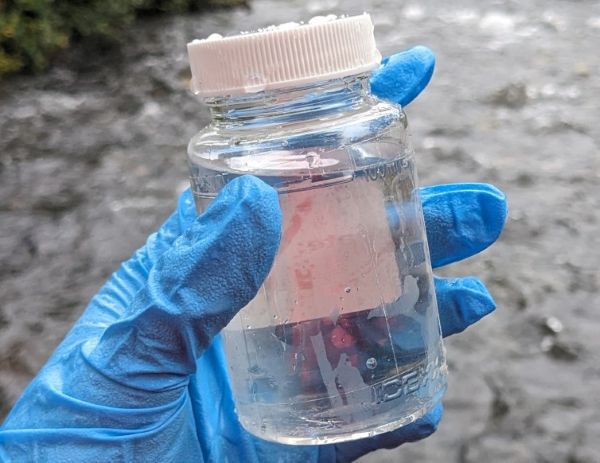
DEC staff member examines a water sample from Cottonwood Creek in Wasilla, Alaska. Photo by DEC staff.
Alaska has abundant water resources, and Alaskans have always had a strong connection to the water and the various activities it sustains. Whether it's fishing, boating, or simply enjoying a drink, the rivers, streams, lakes, and marine areas in Alaska play a crucial role in supporting our everyday routines. Protecting the health of these waters for the benefit of all Alaskans aligns with the mission of the Department of Environmental Conservation (DEC).
DEC’s water quality team has kicked off an assessment of Alaska Water Quality Standards (WQS), called the Triennial Review, gauging the need for updating or revising pollution limits for Alaska’s waters. This entails integrating the latest advancements in science, technology, and policy into the comprehensive review process. The Triennial Review occurs every three years as specified in the Clean Water Action Section 303(c)(1). The WQS are found in Title 18, Chapter 70 of the Alaska Administrative Code and include designated uses for Alaska’s fresh and marine waters (e.g., swimming, fishing, drinking water supply) and the numeric or narrative criteria that must be met to protect those uses ensuring healthy waterways for generations to come.
Following a public comment period, DEC will review the comments received and develop a three-year workplan. The workplan and response to comments is submitted to EPA and will be posted on our website. This workplan may include suggestions to revise WQS, any potential water quality standards change that result from the Triennial Review will follow their own public process.
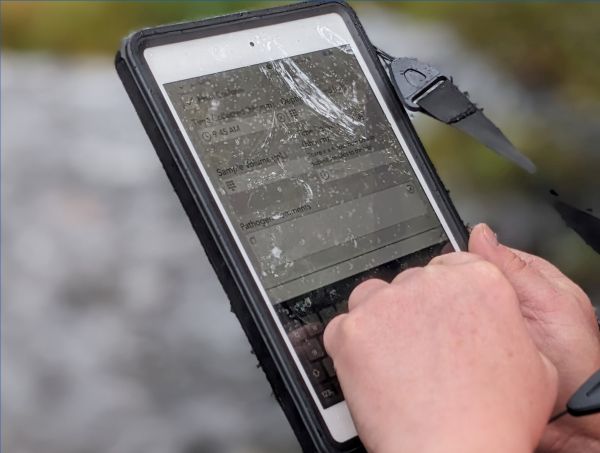
DEC Staff take notes on field monitoring conditions such as weather, wildlife observations, and water levels on Cottonwood Creek in Wasilla, Alaska. Photo by Ashley Oleksiak.
DEC Water Quality Specialist and Triennial Review Coordinator, Brock Tabor, highlights the pivotal role of WQS in safeguarding Alaska’s waterways and the importance of a review process that acknowledges the evolving understanding of pollutants and their impacts on the environment.
“Water Quality Standards (WQS) provide the foundation and define the measuring bar used for Alaska’s waterways so that they continue to support the activities we enjoy – whether it is to serve as a source of drinking water, a place to swim, or catch a fish for dinner,” Tabor emphasized. “As we learn more about the science of pollutants and how humans and the environment interact, we need to think about how we might adapt our policies to account for this new information.”
The 2024-2026 cycle comment period ends May 6th, and DEC is hosting a public hearing in mid-March to solicit public comments. For more information on the WQS Triennial Review process and to submit comments click the following link: https://dec.alaska.gov/water/water-quality/triennial-review.
 Indicates an external site.