Safeguarding the Chena’s Future – Collaborative Efforts to Curb Nonpoint Source Pollution and Protect Water Quality
Written by Jeff Fisher, DEC
October 11, 2024
The Chena River, fed by the White Mountains in Alaska’s interior, flows 100 miles through rugged terrain, white spruce forests, and boreal landscapes before joining the Tanana River. From its headwaters to its confluence, the Chena sustains fish, wildlife, and local communities. As stewards of this vital resource, we all share the responsibility to keep it healthy for our use now and for future generations.
The Alaska Department of Environmental Conservation (DEC) has long partnered with local organizations to tackle nonpoint source pollution in the Chena River watershed. Most recently, during the 2023-2025 Alaska Clean Water Actions (ACWA) grant cycle, DEC supported two key projects led by the Tanana Valley Watershed Association (TVWA): installing pet waste stations in Fairbanks’ parks and identifying green infrastructure needs at priority road crossings—both aimed at reducing harmful pollutants from entering the river. DEC staff also collect water quality data on the Chena. In 2024, DEC began a two-year water quality study looking at bacteria levels and potential sources in the lower Chena River.
Taking care of the business
It’s been estimated there are more dogs in Alaska than people, and the greater Fairbanks area is no exception! But when they poop, where do you scoop? To help answer that, TVWA installed 11 new pet waste stations—two in Alaska Department of Natural Resources parks and nine in Fairbanks North Star Borough parks. Dog walkers will find poop bags and a disposal canister at each station as well as educational signage at several parks. These stations, designed to blend with the landscape and be conveniently located, play a vital role in reducing pathogen and pollutant runoff into the Chena River.
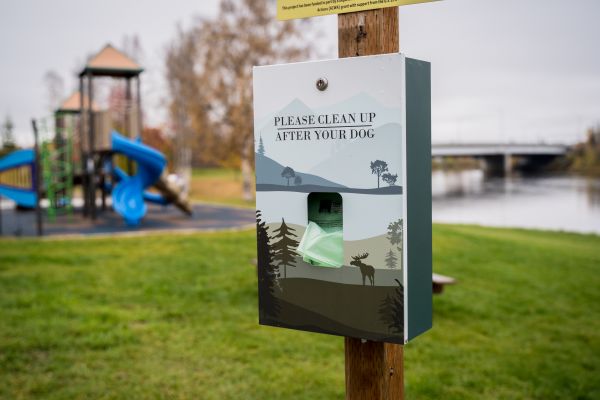
One of the pet waste stations installed by TVWA at Graehl Park Fairbanks, Alaska along the Chena River. Photo by DEC staff Jeff Fisher.
"Preventing dog waste from entering the waterways goes a long way in keeping our environment healthy," said TVWA Executive Director Cory Whitely. "By providing these stations along walkways in public parks, the community can help ensure a cleaner, more enjoyable space for everyone."
Why scoop the poop?
- During rain events or snowmelt, pet waste left on the ground washes into storm drains that empty into the Chena River.
- A single dog’s waste can carry 3 billion fecal coliform bacteria along with other harmful viruses, bacteria, and protozoa that could make humans or even other dogs sick. Animal waste also contains nutrients that could fuel algae growth in rivers and lakes.
- The State of Alaska has limited the amount of bacteria allowed in waterways in order to protect human health.
Crossings, crossings everywhere!
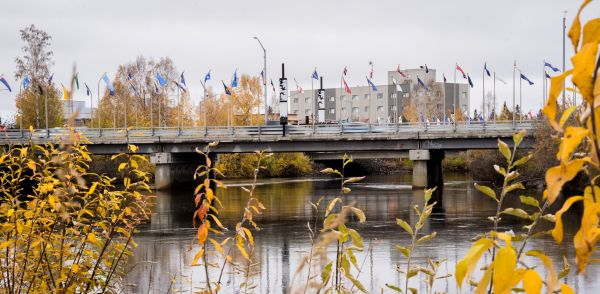
Cars drive over the Cushman Street bridge over the Chena River in downtown Fairbanks. Photo by DEC staff Jeff Fisher.
Many road crossings over the Chena and its tributaries were built decades ago, long before stormwater impacts were considered. Many of these crossings have since become direct pathways for runoff to flow into the river. “Unimpeded stormwater runoff can transfer pollutants from roadways into the watershed,” said Whitely.
Through its ACWA grant project, TVWA evaluated 523 Chena River road crossings and identified 63 high-priority sites for green stormwater infrastructure improvements using a prioritization tool developed under this grant. These sites are prime candidates for green stormwater infrastructure solutions that can reduce pollution and protect the watershed for years to come.
Whitely is hopeful that other watershed partners will build on their work in prioritizing crossings for green infrastructure and incorporate it into future plans for improving these crossings, which are vulnerable to stormwater runoff. “We hope that green infrastructure techniques, which use natural landscaping features and vegetation to filter out contaminants, can be applied at crossings to keep our waterways clean.”
Let the data speak for itself
Building on previous watershed health assessments and water quality data collected from 2020 to 2022 in the Chena River, DEC launched a two-year study in 2024 to further assess fecal coliform and Escherichia coli (E. coli) levels. Results from this study will help inform DEC and the community on the amounts of bacteria in the lower river and if the water quality meets state health standards. Using microbial source tracking (MST), DEC is working to determine whether the pathogens are linked to human-caused pollution.
Monitoring these bacteria in the watershed helps protect public health, preserve ecosystems, and address the broader impacts of nonpoint source pollution. Results from the analysis of the samples collected will inform the state as to the whether the Chena River is meeting the state’s water quality criteria for bacteria and whether further actions need to be taken to protect the health and safety of humans and the ecosystem.
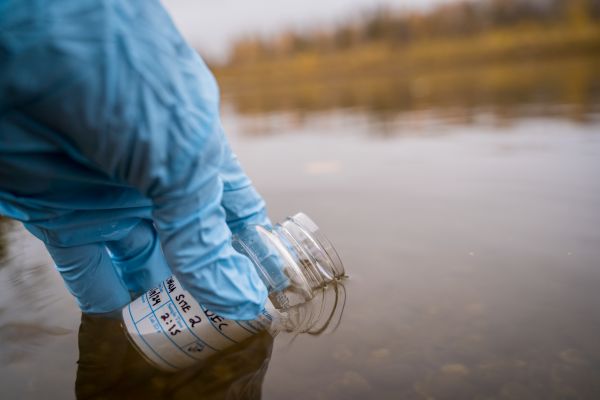
A sample bottle is dipped into the Chena River to collect a pathogen water sample. Photo by DEC staff Jeff Fisher.
Over the coming months, DEC staff will analyze the 2024 data and prepare a report, which will be available this winter. A second season of bacteria sampling will begin in spring of 2025.
The collaborative efforts between DEC, local organizations like TVWA, parks managers, and community environmental stewards are crucial steps toward safeguarding the Chena River. By addressing nonpoint source pollution, prioritizing green stormwater infrastructure, and monitoring water quality, we are not only protecting the Chena today but ensuring its health for generations to come.
 Indicates an external site.