Protecting Public Health: A Study on Bacterial Levels at Dillingham's Beaches
Written by Jeff Fisher, DEC
July 2, 2024
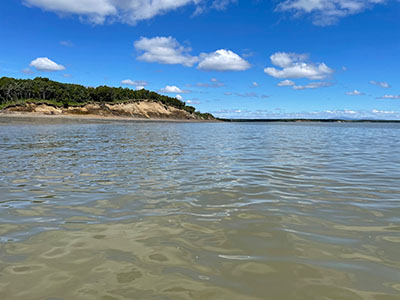
Kanakanak sample site in Dillingham, Alaska. Photo by Matthew Giani, Alaska Water Laboratories LLC.
Bacteria are as much a part of our aquatic ecosystems as the iconic species and recreational activities they support. However, high levels of bacteria such as fecal coliform and Enterococci can indicate unhealthy conditions, and possible risks to human health.
In response to concerns regarding the water quality of Dillingham, Alaska’s marine waters, three public beach sites underwent a thorough bacterial check-up, and the results are in! Partnering with Alaska Water Laboratories LLC, the Department of Environmental Conservation (DEC) conducted an extensive two-year marine pathogens study from 2022 to 2023.
Study Goals
The study aimed to determine if the fecal coliform and Enterococci bacteria populations at Snag Point, Scandinavian and Kanakanak Beaches were exceeding the State of Alaska Water Quality Standards thresholds for recreation use and to identify the sources of these bacteria through Microbial Source Tracking (MST).
What are we monitoring for?
Fecal Coliform and Enterococci, although not harmful themselves, can indicate the possible presence of disease-causing bacteria, viruses, and protozoans that also live in the digestive systems of humans and other warm-blooded animals.
Comprehensive Testing
Testing was conducted during the summer recreational season before, during, and after the commercial fishing season to assess if human activity contributed to elevated bacteria levels. Additionally, DNA speciation methods were used to determine whether the bacteria originated from dogs, wildlife, or humans.
Key Findings
- Detections of at least one type of bacteria were found at all three sites during each sampling event.
- None of the bacteria levels exceeded Alaska’s Water Quality Standards recommended limits for recreational use.
- DNA speciation of the bacteria indicates that gulls were the most consistent bacteria contributor at each of the sample sites.
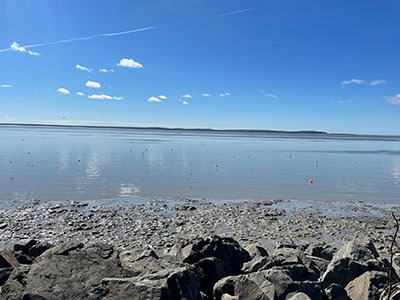
Seagulls congregate at the Snag Point sample site in Dillingham, Alaska. Photo by Matthew Giani, Alaska Water Laboratories LLC.
A Resource for the Future
This study serves as a valuable resource for future monitoring, enabling local communities to stay informed and take action if bacteria levels approach unsafe limits. Through diligent testing and community collaboration, Dillingham's waters continue to support both their natural beauty and public health.
Tips for Healthy Beaches
- Pick up pet waste and dispose of it in a receptacle.
- Use a marine dump station or dump marine sanitation at least 3 nautical miles from shore.
- Cook seafood to an internal temperature of 145° Fahrenheit to kill bacteria.
- Pick up litter along beaches and dispose of them appropriately.
- Get involved with community beach cleanups.
- Use green infrastructure to manage stormwater.
By combining these efforts, communities can help keep marine waters pathogen-free and protect the health of both humans and wildlife. To read the full Dillingham Pathogens Final Report click here: Water Quality Reports and Watershed Plans (alaska.gov).
 Indicates an external site.